Foods That Worsen Fatty Liver Disease
Need expert consultation? Book an appointment with Dr. Babu Elangovan.
Book AppointmentKnowing what to add to the plate only half-solves fatty liver. The other half is stopping the foods that keep telling the liver to make and store fat. This is the avoid list — paired with best foods for liver health — written for Indian kitchens, not a generic Western checklist.
Stages, red flags and the point at which fatty liver stops being a lifestyle problem are explained in fatty liver disease: when does it become serious. This guide is the diet half.
Why some foods drive fat and inflammation
Fructose (soft drinks, packaged juices, many sweets) is handled almost entirely by the liver. Large loads feed de novo lipogenesis — new fat made inside liver cells.
High-glycaemic carbs (maida, polished white rice, sugary snacks) spike insulin. High insulin blocks fat burning and encourages more storage.
Reheated frying oils and trans fats add inflammatory and oxidative stress on top of the calorie load.
Alcohol produces acetaldehyde, a direct toxin to hepatocytes — worse when the liver is already full of metabolic fat.
Sugar and soft drinks
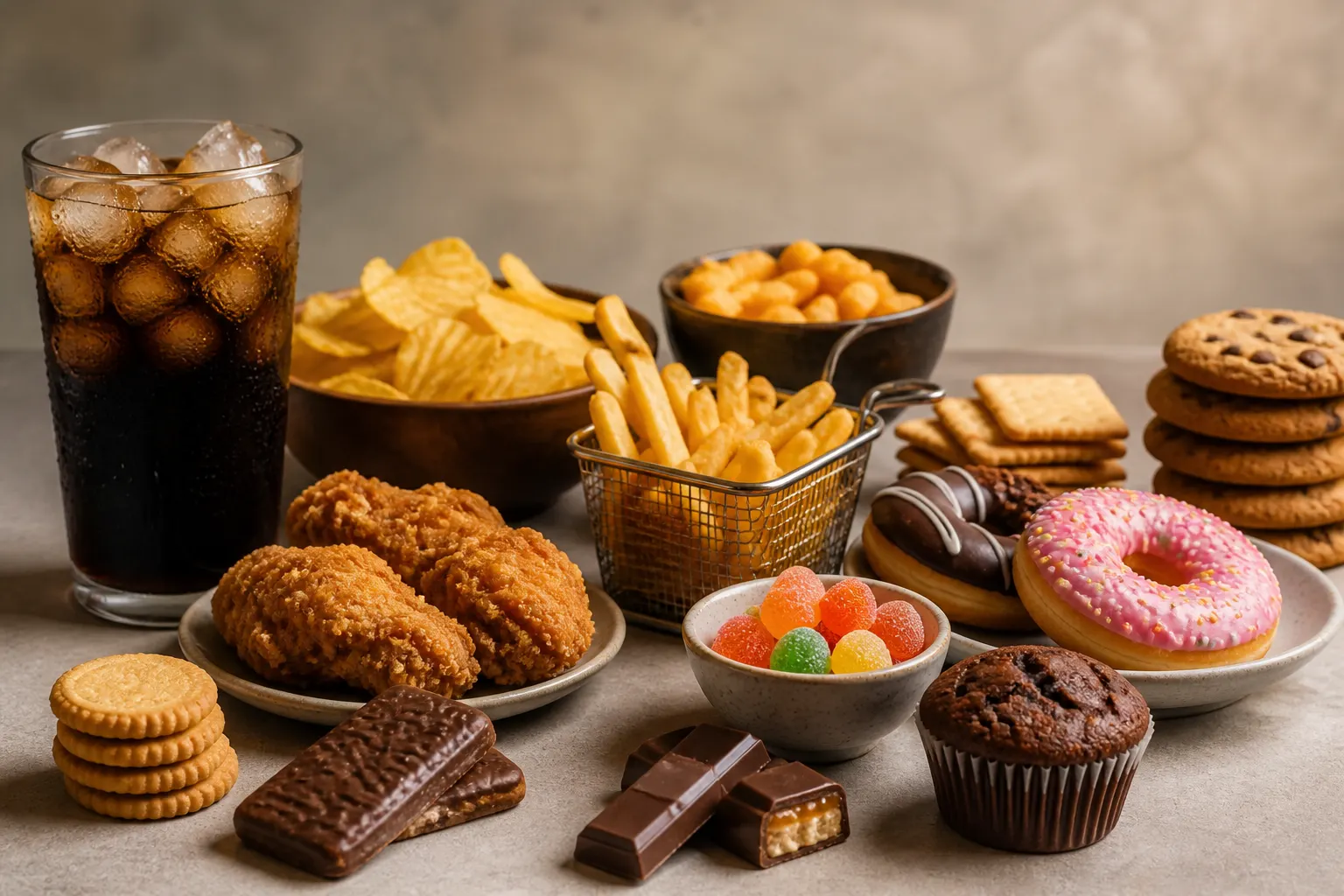
Sodas, energy drinks, sweetened iced tea and boxed juices are among the highest-yield items to cut. Liquid sugar has no fibre, so absorption is fast and the liver takes the hit.
Watch hidden sugar in ketchup, sweetened yoghurt, bakery cream fillings and "health" beverages. If the label's first ingredients are sugar or high-fructose syrup, it belongs on the avoid list.
Sugar under other names
Manufacturers rarely print the word "sugar" once. On an Indian label, look also for: liquid glucose, invert sugar, high-fructose corn syrup, maltodextrin, dextrose, fruit juice concentrate, honey solids, corn syrup solids and jaggery powder in packaged goods. Several of these often appear together, which keeps any single one from topping the ingredient list while the total remains high.
A quick practical test: check total sugars per 100 g rather than per serving, since serving sizes on packets are frequently smaller than anyone actually eats.
What about fruit and jaggery?
Whole fruit is not the problem — fibre slows absorption, and the fructose dose from an orange is nothing like that from a glass of juice. Two to three servings of whole fruit daily is reasonable for most patients with fatty liver.
Jaggery, honey and brown sugar are commonly assumed to be safe alternatives. For the liver they are not meaningfully different from white sugar; the fructose load is what matters, and the trace minerals do not offset it. Reduce the quantity rather than switching the source.
Alcohol
Even “social” drinking accelerates MASLD. For anyone with fatty liver on ultrasound or abnormal enzymes, abstinence is the clean recommendation — not a negotiated weekly quota. Pegs, beer and “I only drink at weekends” are covered in how much alcohol is too much for your liver; recovery after stopping is a separate timeline in what happens to your liver after you stop drinking.
Fried food and trans fats
Samosas, vada, poori, bajji, commercial biscuits, puff pastry and anything cooked in repeatedly reheated vegetable oil load the liver with oxidised fats and calories. Vanaspati and hydrogenated shortenings are particularly unhelpful.
Home cooking in fresh oil, used once, in small amounts is different from street-fried snacks every evening — frequency matters as much as the food name.
Processed snacks and packaged food
Chips, instant noodles, cream biscuits and ready gravies combine refined starch, salt, additives and poor-quality fat. They are easy calories with almost no protective fibre. If it lives in a sealed bag for months, assume it works against fatty liver until proven otherwise.
Excess red and processed meat
Frequent mutton, beef and processed meats (sausages, salami) raise saturated fat and, in excess, iron-related oxidative stress. Prefer dals, sprouts, fish, egg whites or skinless chicken in controlled portions while liver fat is being unloaded.
Indian patterns that quietly worsen things
| Pattern | Why it hurts | Practical swap |
|---|---|---|
| Daily maida parotta / white bread | Rapid glucose → insulin → liver fat | Jowar/bajra roti, millet rice |
| Soft drinks with meals | Liquid fructose | Water, buttermilk, plain soda water without syrup |
| Evening deep-fry snacks | Oxidised oil + calories | Roasted chana, steamed dhokla, fruit |
| Mithai after dinner | Sugar + saturated fat | Fresh fruit; keep sweets for rare occasions |
| Dinner at 10 pm, bed at 11 | Disrupts overnight fat metabolism | Earlier, lighter dinner; 3-hour gap before lying down |
Late heavy meals matter more than most grocery lists admit. The liver is primed overnight to burn, not store — a large late dinner fights that rhythm.
Eating out and social occasions
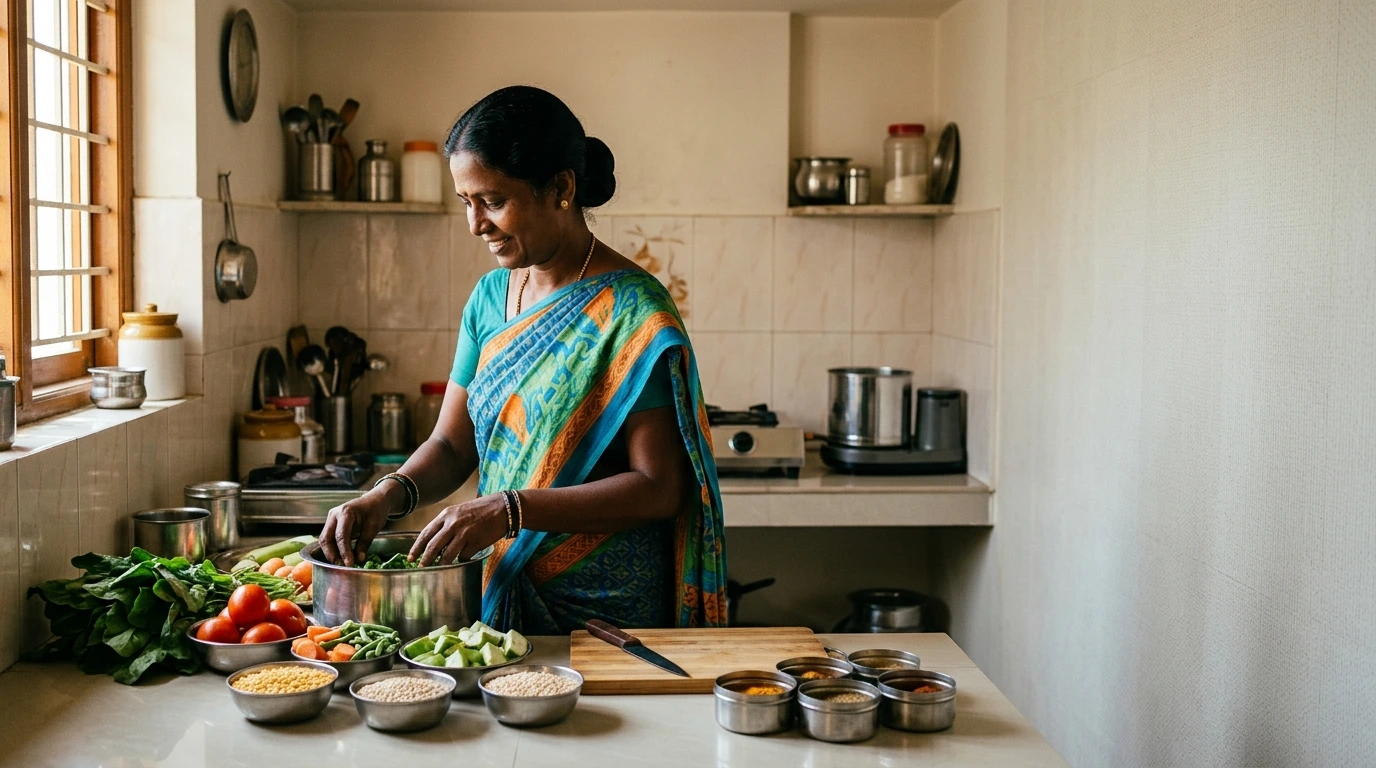
An avoid list that collapses at the first wedding is not a plan. A few things make restaurant and function eating survivable:
- Eat something small before you go, so you are not arriving hungry to a fried buffet
- Choose tandoori, grilled or steamed over gravy dishes swimming in oil
- Take the sweet, not three; sharing a single portion is usually enough socially
- Keep the drink non-alcoholic and unsweetened — soda with lime rather than a cola or a peg
- Return to the usual pattern at the next meal rather than writing off the week
Occasional deviation does not undo months of progress. What undoes progress is treating one lapse as evidence that the whole effort has failed, which is how a single wedding becomes a lost quarter.
Red flags: when diet is not the whole answer
Stop self-managing and get assessed if you develop jaundice, abdominal swelling, leg oedema, easy bruising, confusion, vomiting blood or black stools — or if fatigue and right-upper discomfort persist despite months of sincere diet change. Those paths are clinical, not culinary; advanced care sits under liver transplant when disease has progressed that far.
If you need a structured plan
Bring prior ultrasounds and blood work. We can separate reversible steatosis from fibrosis that needs monitoring, and set a diet you can actually keep in a Chennai household.
Consultations with Dr. Babu Elangovan are available at Mira Health Care (Adyar), Kauvery Hospital (Alwarpet), Capstone Clinic (T. Nagar), Kumaran Hospital and THANC Hospital (Kilpauk).
Book an appointment or call +91 94440 43478.
This article is general information, not a personal diet prescription. People with diabetes, kidney disease or advanced liver disease need individualised advice before major diet changes.
References
- Rinella, M. E., et al. "AASLD Practice Guidance on the Clinical Assessment and Management of Metabolic Dysfunction-Associated Steatotic Liver Disease." Hepatology, 2023. https://www.aasld.org/
- Jensen, T., et al. "Fructose and Sugar: A Major Mediator of Non-Alcoholic Fatty Liver Disease." Journal of Hepatology, 2018. https://www.journal-of-hepatology.eu/
- European Association for the Study of the Liver (EASL). "EASL–EASD–EASO Clinical Practice Guidelines on the Management of MASLD." Journal of Hepatology, 2024. https://www.journal-of-hepatology.eu/
- World Health Organization (WHO). "Guideline: Sugars Intake for Adults and Children." 2015. https://www.who.int/
- Indian Council of Medical Research (ICMR). "Dietary Guidelines for Indians." National Institute of Nutrition. https://www.nin.res.in/
Authored by